
Razor bumps
Can Veterans Get VA Benefits for pseudofolliculitis barbae (PFB)?
Veterans can receive a VA rating for shaving bumps, also known as razor bumps, traumatic folliculitis, or pseudofolliculitis barbae (PFB). Regular shaving, as required in the military, can lead to PFB, especially in African American men. Veterans can receive a rating for their razor bumps between 0% and 60% based on the severity of their condition. Read on to learn more about the VA rating for razor bumps and how veterans can service connect their PFB.
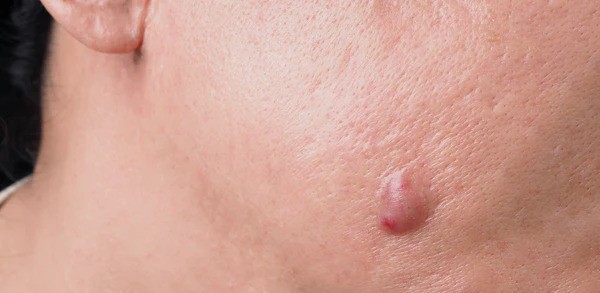

What is pseudofolliculitis barbae?
Pseudofolliculitis barbae (PFB) is a skin condition primarily affecting the hair follicles and surrounding skin. In this article, we will refer to PFB, razor bumps, and shaving bumps interchangeably.
After tightly coiled hair is shaved or plucked, the sharp tips of the newly growing hair may penetrate the adjacent skin. The natural curve of the hair follicle directs the hair to grow back into the skin, leading to irritation. Or, using techniques such as tweezing or shaving with razors that have multiple blades, the new growth may stay under the skin’s surface, failing to immediately penetrate the skin. Depending on the severity of the condition, PFB may be treatable with topical creams. More severe cases require advanced treatments such as laser therapy.
PFB is most often found in African American men and other individuals with tight, curly hair. As many as 94% of African American men are estimated to experience PFB at some stage in their lives. It also frequently affects Asian, Hispanic, and Middle Eastern men.
Razor bumps and veterans
For decades, the U.S. military strictly regulated grooming to maintain uniformity, discipline, and safety among troops. These rules were reinforced during World War I, particularly the requirement for service members to be clean-shaven. Chemical warfare had emerged as a threat during this time, and it was challenging for bearded men to get the proper seal required for gas masks to be effective.
Unfortunately, shaving regularly can lead to painful issues for service members prone to razor bumps. Concerns over PFB grew as reports of the condition to the Defense Health Agency skyrocketed by 4,708% in just over 20 years. It’s believed 45% of Black service members have PFB.
As a result, the military developed shaving profiles. These profiles provide alternative styles of facial hair for members of the military who are medically excused from being clean-shaven. Since some of the complications from shaving can continue after service, they provide a razor bumps VA rating. There is no specific shaving profile VA rating, but veterans have received benefits for PFB under the General Rating Formula for the Skin.
VA rating for razor bumps
The VA typically assigns a VA rating for razor bumps using the General Rating Formula for the Skin.
The VA determines the rating for most skin conditions based on the amount of skin affected or if treatment is needed. For example, the VA may award a 30% disability rating for shaving bumps to veterans with pseudofolliculitis barbae whose condition required at least six weeks of systemic treatment therapy over the last year.
General Rating Formula For The Skin For DCs 7806, 7809, 7813–7816, 7820–7822, and 7824:
Description |
VA Rating |
Monthly Payment
|
|---|---|---|
At least one of the following:
|
60% |
$1,395.93 |
At least one of the following:
|
30% |
$537.42 |
At least one of the following:
|
10% |
$175.51 |
No more than topical therapy required over the past 12-month period and at least one of the following:
|
0% |
None |
Systemic therapy can include corticosteroids, phototherapy, retinoids, biologics, photochemotherapy, psoralen with long-wave ultraviolet-A light (PUVA), or other immunosuppressive drugs, among other treatments.
The VA may also rate PFB based on the presence of disfiguring or painful scars from the condition on the head, face, or neck using code 7800. The VA determines these ratings based on symptoms of asymmetry, tissue loss, or any of the eight “characteristics of disfigurement.” You can read more about how the VA handles this on our blog post about VA disability for scars.
7800 Burn scar(s) of the head, face, or neck; scar(s) of the head, face, or neck due to other causes; or other disfigurement of the head, face, or neck:
Description |
VA Rating |
Monthly Payment
|
|---|---|---|
With visible or palpable tissue loss and either gross distortion or asymmetry of three or more features or paired sets of features (nose, chin, forehead, eyes (including eyelids), ears (auricles), cheeks, lips), or; with six or more characteristics of disfigurement |
80% |
$2,044.89 |
With visible or palpable tissue loss and either gross distortion or asymmetry of two features or paired sets of features (nose, chin, forehead, eyes (including eyelids), ears (auricles), cheeks, lips), or; with four or five characteristics of disfigurement |
50% |
$1,102.04 |
With visible or palpable tissue loss and either gross distortion or asymmetry of one feature or paired set of features (nose, chin, forehead, eyes (including eyelids), ears (auricles), cheeks, lips), or; with two or three characteristics of disfigurement |
30% |
$537.42 |
With one characteristic of disfigurement |
10% |
175.51 |
TDIU for razor bumps
Veterans with disabilities that prevent them from maintaining gainful employment may be entitled to total disability based on individual unemployability (TDIU) benefits.
TDIU provides a pathway for veterans to receive the same compensation as a 100% rating, even when their symptoms do not meet the criteria for a schedular 100% rating.
While it’s possible for PFB or razor bumps to be considered in a claim for TDIU, it’s unlikely that this condition alone would qualify. It may be difficult to receive a 60% rating for a skin condition that only affects the face and neck except in especially severe cases. However, if razor bumps are part of a broader range of service-connected disabilities significantly impairing your ability to work, you may still qualify for TDIU.
To be eligible for TDIU, veterans typically must have:
1
At least one service-connected disability rated at 60% or more disabling OR
2
Two or more service-connected disabilities with at least one rated at 40% or more disabling and a combined rating of 70% or more
How VA can help
If you need help getting the VA disability benefits you deserve, contact us at VA Benefits. Our team of VA-accredited lawyers, legal analysts, case managers, intake specialists, and support staff is here to assist you. Reach out today for a free case evaluation. You only pay if we win your case.