
Nocturia
VA Disability for Nocturia and Sleep Apnea
Are you a veteran that finds yourself waking up multiple times throughout the night to go to the bathroom? You may be eligible for VA disability for nocturia and sleep apnea.
Have you ever wondered why it never feels like your bladder is empty? Do you feel tired all the time, and do you have trouble focusing during the day? If any of this sounds familiar, you could be suffering from nocturia. Veterans can receive VA benefits for both conditions.

What is nocturia?
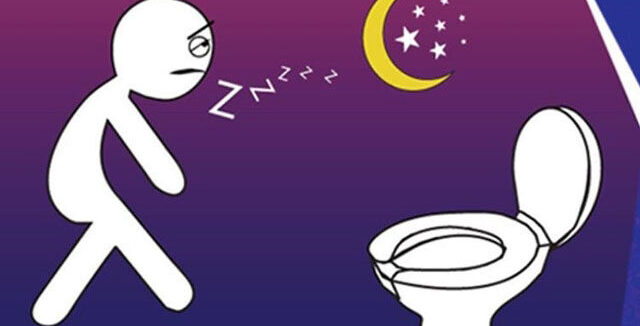
Nocturia is a condition in which you find yourself having to get up to urinate more frequently throughout the night. You may be urinating in small amounts at a time multiple times throughout the night. In many cases, people with nocturia also experience more frequent daytime urination.
Normally, you should be able to sleep between six and eight hours in a row without having to get up to use the bathroom. When you have nocturia, you may find yourself waking up every two to three hours just to use the restroom.
Causes of nocturia
There can be a number of different causes of nocturia. Nocturia is often caused by a problem with your bladder. Your bladder may not be able to empty all the way when you urinate, causing it to fill up more quickly, or it may start signaling you that its full and triggering the urge to urinate before it really is.
If you have had any previous bladder, urinary tract, or prostate problems in the past, you could be at a higher risk of developing nocturia. People with diabetes, cardiac disease, or a BMI over 23 may also be at higher risk. Anxiety, high blood pressure, and alcohol consumption can all also increase your risk of developing nocturia. Under the age of 50, women are more likely to get nocturia. At the age of 60+, men are more likely to develop the condition.
Although nocturia may be related to sleep apnea, it can also be caused by and/or connected with several other conditions.
Nocturia VA rating
While nocturia does not have its own diagnostic code, it is rated analogously using the criteria for “voiding dysfunction,” as follows:
Description |
VA Rating |
Monthly Payment
|
|---|---|---|
Daytime voiding interval less than one hour, or; awakening to void five or more times per night. |
40% |
$774.16 |
Daytime voiding interval between one and two hours, or; awakening to void three to four times per night. |
20% |
$346.95 |
Daytime voiding interval between two and three hours, or; awakening to void two times per night. |
10% |
$175.51 |
What is sleep apnea?
Sleep apnea is a sleep disorder in which a person’s breathing suddenly stops and starts several times while sleeping, often causing them to wake up multiple times during the night.
When you stop breathing and the oxygen levels in your body drop, you experience all the physical symptoms – lowered heart rate, the buildup of carbon dioxide, and more. Your brain gets all these signals and, thinking you’re choking, wakes you up so you can breathe.
These constant awakenings throughout the night can prevent you from reaching the deeper stages of sleep when your brain gets the rest it really needs.
One of the most recognizable symptoms of sleep apnea is snoring, which is caused by the obstruction in your airways. You may stop breathing entirely for up to thirty seconds, or you may attempt to breathe, but take in no air. You might wake up choking or gasping as your brain attempts to rouse your body enough to get the oxygen it needs.
Sleep apnea VA rating
Description |
VA Rating |
Monthly Payment
|
|---|---|---|
Chronic respiratory failure with carbon dioxide retention or cor pulmonale, or; requires tracheostomy |
100% |
$3,831.30 |
Requires use of breathing assistance device such as continuous airway pressure (CPAP) machine |
50% |
$1,102.04 |
Persistent day-time hypersomnolence |
30% |
$537.42 |
Asymptomatic but with documented sleep disorder breathing |
0% |
$0 |
TDIU for sleep apnea and nocturia
Sleep problems like nocturia and sleep apnea can cause a variety of occupational issues. Lack of sleep makes it harder to focus and concentrate, making work difficult or impossible. Since sleep apnea and nocturia have been linked, the two conditions combined can create even more difficulty when it comes to sleeping and functioning in everyday life. Sleep disorders are also often linked to many mental health issues.
Because of this, veterans with nocturia and sleep apnea may qualify for total disability based on individual unemployability (TDIU) because they sleep and mental health issues often rule out even sedentary work.
TDIU benefits grant the same amount of monthly compensation as a 100% VA disability rating. Veterans who are eligible for TDIU benefits could possibly receive more than $3,831.30 a month.
How our VA-accredited attorneys can help
VA Benefits has worked with thousands of veterans nationwide to get them the VA benefits they deserve. Call us for a free case evaluation to find out how we can help. If we take your case, you only pay us a percentage of your back pay if you win.