
Anthrax vaccine side effects
Will veterans who received an anthrax vaccine get VA benefits?
When we hear the word “anthrax” these days, many of us remember the deaths that occurred when anthrax was sent through the mail in the days and even months after the 9/11 terrorist attacks. The attacks shut down the U.S. Capitol, mailrooms, and newsrooms across the country.
However, the U.S. military was aware of this type of biowarfare almost a decade earlier. In its attempts to protect service members, the Department of Defense mandated the anthrax vaccine. Although many reported side effects–and some suspected a link between Gulf War Syndrome and the vaccine–the VA does not acknowledge a presumed link. It is still possible, in some instances, for the resulting conditions and disabilities to qualify for VA benefits.
What is anthrax bacteria?
Before discussing the vaccine’s side effects, here is a quick overview of why anthrax attacks can be so serious and potentially deadly.
Anthrax is caused by a bacterium, Bacillus anthracis, which forms spores. In naturally occurring instances, these spores infect animals first, and humans can contract the disease if they come into contact with these sick animals through a wound in their skin or by eating an animal infected with anthrax bacteria.
When it’s used for bioterrorism, it can be used in powder form, and the recipient(s) can contract anthrax by inhaling the spores.
Anthrax can cause:
In fatal cases, the bacteria will cause sepsis and the body will no longer be able to respond to new and old infections.
Anthrax Vaccine Immunization Program
During the late 1980s and early 90s, U.S. intelligence agencies reported that it was likely that Saddam Hussein was creating bombs and missiles loaded with Anthrax prior to the military’s involvement in the Gulf War.
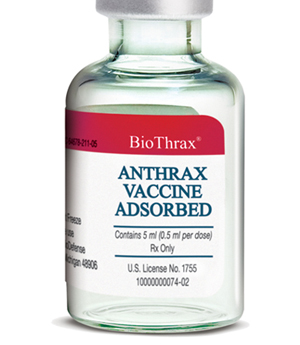
A vaccine, BioThrax, manufactured by BioPort (now known as Emergent Biosolutions), was found to be effective against anthrax when it is absorbed through the skin, but not when the anthrax is inhaled.
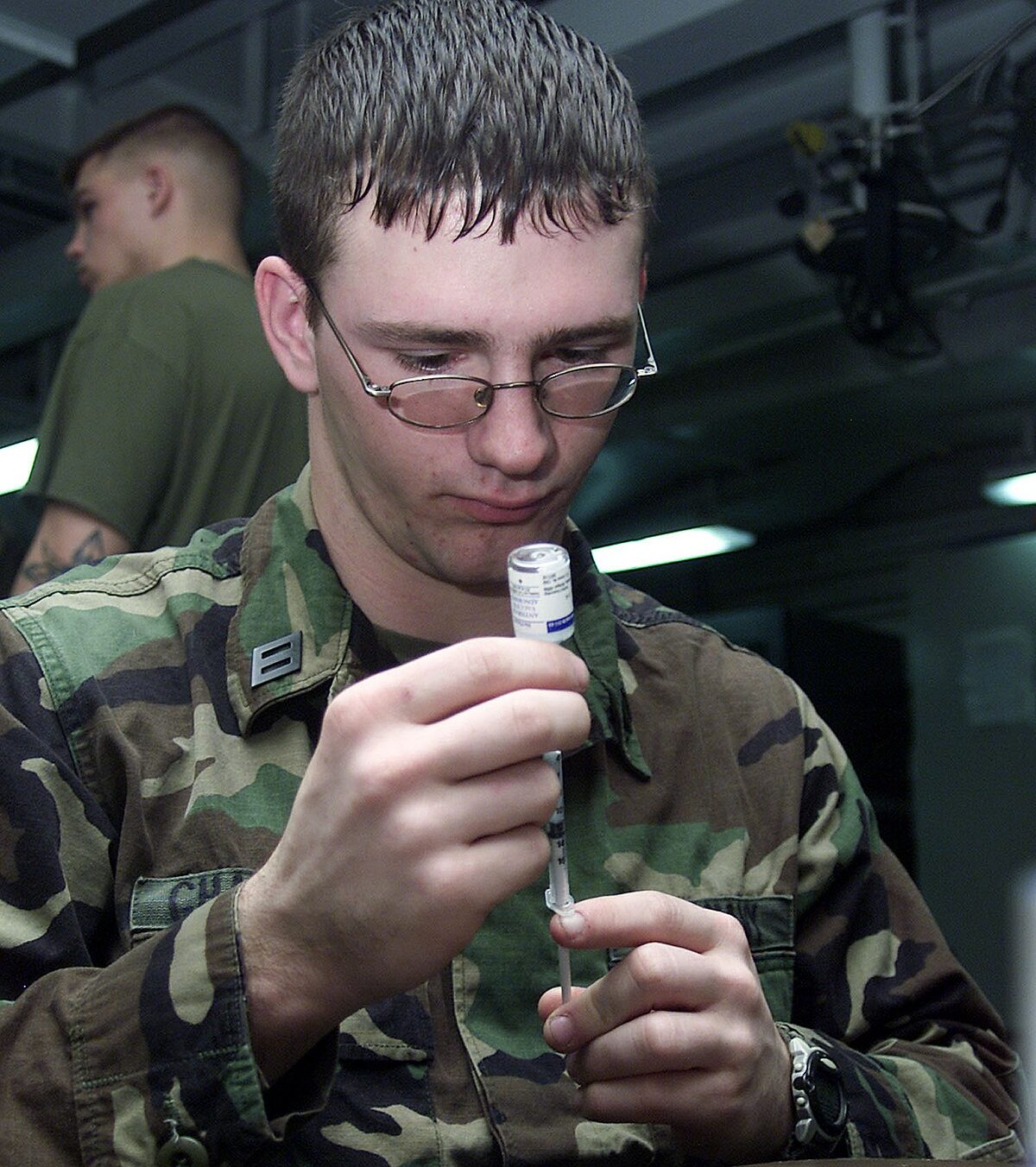
The Department of Defense launched the Anthrax Vaccine Immunization Program (AVIP) and mandated that any military members being deployed to Iraq or Afghanistan would receive the BioThrax vaccine. The DoD issued a full mandate for all 2.5 million military personnel in 1997 and for all civilian DOD personnel in 1998.
In 2004, a U.S. federal judge halted the mandatory vaccination program until the vaccine was approved for inhaled anthrax.
BioThrax was not FDA approved for the inhaled anthrax bacteria until 2015.
Squalene in the vaccines
A 2000 study found that 95% of the personnel diagnosed with Gulf War Syndrome GWS had anti-squalene antibodies. In the same year, it was discovered that anti-squalene antibodies (ASA) were present in 47% of personnel who were receiving certain lots of the vaccine in the immunization program. This was compared to 0% of ASA presence in military personnel who received different lots of the vaccine. This means that some of the lots may have contained squalene while other lots did not.
The effects of squalene are unclear. While many have tried to connect the adverse reactions from BioThrax to squalene and soldiers with Gulf War Syndrome, the National Institutes of Health published a study in 2009 questioning the link of the effects to squalene. The study concluded that many people have naturally occurring levels of squalene that are higher than what is present in vaccines and that vaccines containing squalene do not increase the concentration of naturally-occurring squalene in the bloodstream.
How VA can help
At VA Benefits, we focus on helping non-working veterans with service-connected conditions get individual unemployability benefits and, in some cases, increased ratings. We also help survivors of veterans receive their DIC benefits. If you think we can help you with your claim, call us today for a free case evaluation. You won’t pay us unless we win your case.