
Deviated septum
Veterans Can Get VA Disability for a Deviated Septum
A deviated septum can lead to loss of quality sleep, and also cause veterans to develop sleep apnea, headaches, or sinusitis. These conditions can make it difficult to live a normal life. If you are a veteran with a deviated septum from a training accident, military vehicle accident, a fall, or another injury to the face during service, you may qualify for a deviated septum VA rating.
In this article, we detail what a deviated septum is, how the VA rates the condition, and how to file a claim for a condition secondary to your deviated septum.
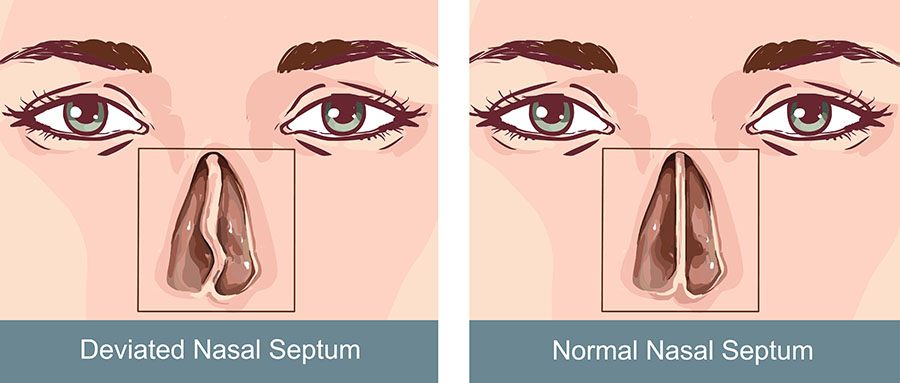
What is a deviated septum?
A deviated septum occurs when the wall between your nasal passages, called the septum, is off-center, causing one nasal passage to be smaller than the other. Up to 80% of the general population may have some degree of septal displacement without even knowing it. While many people don’t experience symptoms, others with a deviated septum can experience serious health concerns.
In many cases, a deviated septum leads to nasal blockages, congestion, and recurring nosebleeds. In more severe cases, the condition can reduce airflow and make it difficult to breathe through one or both sides of the nose.
Other symptoms of a deviated septum include:
Some people are born with a deviated septum, while others are caused by a blow to the face or nasal trauma from falls, sports injuries, car accidents, or physical fights.
Veterans with a deviated septum are only eligible for a VA rating for a deviated septum if their condition is caused by an injury during service. Veterans born with a deviated septum do not qualify for disability compensation unless military service or service-connected disabilities have aggravated their deviated septum.
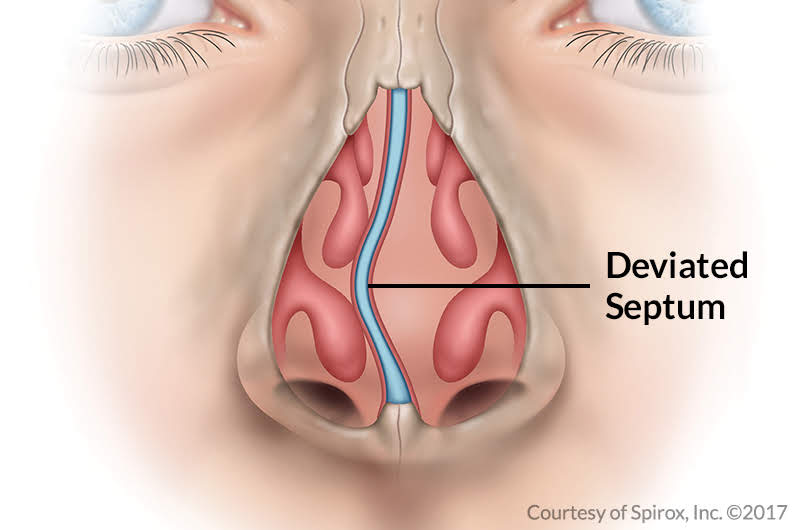
Deviated septum VA rating
Under diagnostic code 6502, the only possible rating a veteran can receive for a deviated septum is 10%.
You could receive a 10% rating for deviated septum if:
- You have at least a 50% obstruction of the nasal passage on both sides, OR
- You have a complete obstruction of the nasal passage on one side, AND
- Your deviated septum is service-connected due to an injury you incurred during service
How to service connect a deviated septum
To receive VA benefits, you have to be able to prove that your condition was caused by military service or that your condition was made worse by military service or service-connected disabilities.
Below is what a veteran needs in order to receive VA disability for their deviated septum:
- Current disability (often a diagnosis from a medical professional).
- Proof of the in-service event (fight, training accident, vehicle accident, injury during combat, fall, etc.) that caused your deviated septum.
- A medical nexus between your deviated septum and military service. A medical nexus could be a letter from your doctor explaining how the in-service event caused your septal displacement. A medical nexus can also establish how your deviated septum caused a secondary health condition like the ones listed above.
Once you have gathered all of your evidence, you can file a claim for disability benefits and submit your claim to the VA.
TDIU for nasal issues
Veterans with one or more disabilities may find it difficult, if not impossible, to work and earn a living.
Veterans who are unable to maintain substantially gainful employment due to service-connected conditions may be eligible for total disability based on individual unemployability (TDIU).
While a deviated septum on its own will not keep a veteran from working, a deviated septum caused by an event in service may lead a veteran to developing other secondary health conditions. The combined effects of these conditions and any other health issues tied to your service could qualify you for TDIU.
TDIU pays the same amount as a 100% disability rating, without the requirement of having a disability rated 100%.
Veterans may eligible for TDIU if they have:
1
At least one service-connected disability rated at 60% or more disabling OR
2
Two or more service-connected disabilities with at least one rated at 40% or more disabling and a combined rating of 70% or more